
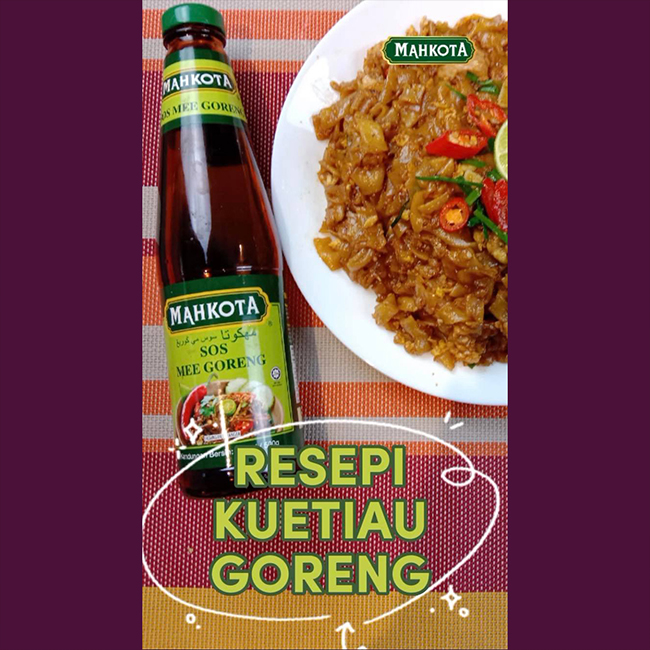
Kuetiau Goreng dengan Mahkota Sos Mee Goreng
20/06/2023Premium Oyster Sauce vs Regular: What Really Makes the Difference?
15/04/2026If you cook at home in Malaysia, oyster sauce is most likely already in your kitchen. It’s the “one spoon, instant sedap” shortcut for stir-fried kailan, sizzling beef, fried noodles, and mushroom glaze. The tricky part is choice. In the oyster sauce aisle in Malaysia, you’ll see “oyster sauce”, “oyster flavoured sauce”, and “vegetarian oyster sauce” all side by side. Use these checks to pick the most authentic flavour.
Read The Ingredient List
Authentic oyster sauce gets its savoury depth from real oyster ingredients. For oyster sauce shopping in Malaysia, look for “oyster extract” or “oyster juice” on the label. If oyster shows up only as “oyster flavouring” with no extract/juice mentioned, the sauce may lean more towards sweet than umami. Also note the order: ingredients are usually listed from most to least. If sugar is right at the top and oyster is far down, you’re likely buying sweetness first and complexity later.
Know What You’re Buying: Oyster Sauce vs Oyster Flavoured Sauce
This is the biggest confusion when it comes to oyster sauce in Malaysia. Oyster sauce is usually richer and rounder, with the kind of seafood savouriness that makes vegetables taste as if they came from a wok stall. Oyster-flavoured sauce is often lighter on oyster content and designed as an everyday all-rounder. It’s not “wrong” – it just behaves differently. For simple veg, it’s fine; for yee mee, claypot chicken, or ginger beef, you’ll usually appreciate the deeper taste of authentic oyster sauce.
Use Your Senses: Thickness, Shine, Aroma
A good oyster sauce shouldn’t pour like soy sauce. It should be glossy and slightly thick, coating a spoon rather than running off. Colour is usually deep brown (not pale or watery). Smell matters too: you want savoury and slightly briny, not a strong caramel sweetness. If you’re comparing oyster sauce brands in Malaysia at home, the one that clings better usually wins. It’s especially noticeable in wok-fried greens, too.
Look For Trust Signals On The Label
Quality isn’t only about taste – it’s also about consistency and food safety. Check for manufacturer details, batch number, expiry date, and clear storage instructions (many sauces recommend refrigerating after opening). In Malaysia, Halal status is a practical check for many households. Food-safety certifications such as GMP, HACCP, or ISO-based food safety management are also worth noting because they signal tighter process control.
Match The Sauce To Your Lifestyle
The best oyster sauce in Malaysia depends on how you cook. If you’re sensitive to additives, consider a gourmet option that clearly states it contains no added MSG or preservatives. If you don’t take shellfish or you’re cooking for vegetarian friends, a mushroom-based vegetarian “oyster” sauce can still bring that savoury punch to tofu, greens, and noodles. Many Malaysian homes keep two bottles: one for daily stir-fries, and one “special” sauce for braises and dishes you’re proud to serve.
Consider Your Oyster Sauce In Malaysia From Sin Tai Hing
At Sin Tai Hing, oyster sauce is where our story began. We started in 1978 as a small family business making traditional oyster sauce, and today we produce from manufacturing facilities covering 38,000 sq ft, supplying restaurant owners and hypermarkets too.
We’re serious about quality, which is why our processes are backed by Halal (JAKIM), GMP, HACCP (Intertek), ISO 22000:2018, and MeSTI certifications. We’ve built a wide range, including vegan-friendly oyster sauces and a gourmet oyster sauce made with no added MSG or preservatives. If you want an oyster sauce in Malaysia with flavour you can rely on, choose Sin Tai Hing and taste the difference in every stir-fry.